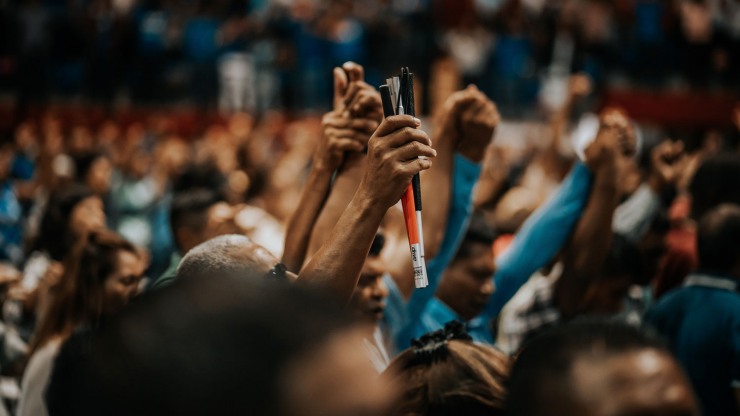
Imagine scrolling through your social media feed on a crisp December morning, and a simple yet striking image catches your eye—a vibrant illustration of diverse hands raised in unity, set against a clean, two-dimensional backdrop. That’s the power of flat design in action, especially when it comes to commemorating Human Rights Day. As someone who’s dabbled in graphic design for community events, I’ve seen how these minimalist visuals can spark conversations and inspire action without overwhelming the message. In this deep dive, we’ll unpack everything from the historical roots of Human Rights Day to practical tips on crafting your own flat design backgrounds, all while keeping things straightforward and visually engaging.
The Essence of Human Rights Day
Human Rights Day, observed every December 10th, marks the anniversary of the United Nations General Assembly’s adoption of the Universal Declaration of Human Rights in 1948. This pivotal document outlined fundamental freedoms for all people, regardless of background, and became a cornerstone for global justice. It’s not just a date on the calendar; it’s a reminder of our shared humanity amid ongoing struggles for equality.
Why December 10th Matters
December 10th was chosen to honor the day the Universal Declaration was proclaimed in Paris, following the horrors of World War II. This timing underscores a collective vow to prevent atrocities and promote dignity worldwide. Today, it serves as a global call to action against discrimination and injustice.
A Personal Reflection on Its Impact
Back in my college days, I volunteered at a local NGO where we organized a small rally on December 10th. Seeing people from all walks of life unite under banners of freedom made the day’s significance hit home—it’s about everyday people standing up for what’s right.
Historical Background of Human Rights Day
The roots of Human Rights Day trace back to the aftermath of World War II, when the world grappled with unimaginable violations. The United Nations, formed in 1945, tasked a committee led by Eleanor Roosevelt to draft a declaration that would set universal standards. Adopted in 1948, it was a beacon of hope in a divided world.
Key Milestones in Its Evolution
From its inception in 1950 via UN Resolution 423(V), Human Rights Day has grown into an annual observance inviting nations to reflect and act. Over decades, it has influenced treaties like the International Covenant on Civil and Political Rights. Its evolution mirrors global shifts toward inclusivity and accountability.
From Declaration to Global Movement
What started as a post-war response has ballooned into campaigns addressing modern issues like climate justice and digital rights. I once attended a webinar where activists shared how the declaration inspired anti-apartheid efforts—proving its timeless relevance.
Significance of Human Rights Day in Today’s World
In an era of rising inequalities and conflicts, Human Rights Day reminds us that rights like freedom of speech and equality aren’t luxuries but essentials. The 2025 theme, “Human Rights, Our Everyday Essentials,” emphasizes their role in daily life, from education to healthcare. It fosters awareness and urges governments to uphold these principles.
Bridging Global Divides
This day highlights how interconnected our struggles are—think refugee crises or gender-based violence. By celebrating it, we build solidarity across borders, encouraging empathy in a polarized world.
Emotional Ties to the Cause
I recall a friend sharing her story of fleeing persecution; events like Human Rights Day gave her hope. It’s these personal connections that make the day more than symbolic—they humanize the fight.
Understanding Flat Design: A Modern Aesthetic
Flat design is a minimalist style that strips away three-dimensional effects like shadows or gradients, focusing on simple shapes, bold colors, and clean typography. Emerging in the early 2010s as a counter to skeuomorphism, it prioritizes usability and speed, making it ideal for digital platforms.
Origins and Rise of Flat Design
Born from Swiss Style influences and popularized by Microsoft’s Metro interface, flat design exploded with iOS 7’s overhaul. It emphasizes functionality over ornamentation, allowing content to shine without distractions.
Why It Feels Fresh
Picture your phone’s icons—flat, intuitive, and quick to load. In my early design gigs, switching to flat styles cut production time while boosting engagement; it’s like decluttering a room for better flow.
Why Flat Design Suits Human Rights Day Backgrounds
Flat design’s simplicity aligns perfectly with Human Rights Day’s core message of universality and clarity. Without visual clutter, symbols like fists or doves convey equality and peace powerfully, making backgrounds accessible and shareable on social media.
Enhancing Message Delivery
In advocacy graphics, flat backgrounds ensure the focus stays on themes like justice or diversity. Bright, contrasting colors evoke emotion without overwhelming, ideal for posters or online campaigns.
A Humorous Take on Simplicity
Ever tried explaining human rights with a busy, 3D graphic? It’s like shouting in a crowded room—flat design whispers effectively, letting the message land with a gentle punch.
Key Elements of Flat Design Backgrounds
Core to flat design are two-dimensional shapes, vibrant color palettes, and minimal textures. For Human Rights Day, incorporate icons like chains breaking or hands clasping to symbolize freedom and unity.
Color Choices for Impact
Opt for bold primaries—blues for trust, reds for urgency—to evoke solidarity. Pastel backgrounds can soften the tone for educational content, while high contrast ensures readability.
Integrating Symbols Seamlessly
I once designed a flat background with a globe encircled by diverse figures; the key was balancing negative space to avoid crowding, creating a sense of global harmony.
Here’s an example of a flat design background for Human Rights Day, featuring raised fists and a sunny horizon for optimism.
How to Create Flat Design Backgrounds for Human Rights Day
Start with sketching basic shapes representing rights themes, like a fist for empowerment or a scale for justice. Use tools like Adobe Illustrator for vector precision, ensuring scalability without quality loss.
Step-by-Step Process
Begin by selecting a canvas size suited for digital or print. Layer simple geometric forms—circles for unity, rectangles for structure—and apply flat colors. Add text like “Human Rights Day” in sans-serif fonts for modernity.
Tools and Software Recommendations
Free options like Canva offer templates, while pros swear by Illustrator for custom paths. Experiment with Figma for collaborative designs; it’s user-friendly for beginners.
- Gather Inspiration: Browse sites like Freepik for Human Rights Day vectors.
- Sketch Ideas: Rough out compositions on paper first.
- Digitize Shapes: Use pen tools to create clean outlines.
- Apply Colors: Stick to 4-6 hues for harmony.
- Export Formats: Save as SVG for web, PNG for social shares.
Best Tools for Designing Flat Backgrounds
Adobe Illustrator tops the list for its vector capabilities, perfect for resizing without pixelation. Canva provides drag-and-drop ease with pre-made Human Rights Day elements, ideal for quick projects.
Free vs. Paid Options
Inkscape offers free vector editing akin to Illustrator, while Affinity Designer is a one-time buy alternative. For mobile, try Vectornator for on-the-go creation.
My Go-To Workflow
I start in Canva for rapid prototypes, then refine in Illustrator. It’s like sketching with crayons before painting a masterpiece—efficient and fun.
| Tool | Pros | Cons | Best For |
|---|---|---|---|
| Adobe Illustrator | Precise vectors, advanced features | Subscription cost | Professional designs |
| Canva | User-friendly, templates | Limited customization | Beginners, quick edits |
| Inkscape | Free, open-source | Steeper learning curve | Budget-conscious users |
| Figma | Collaborative, web-based | Requires internet | Team projects |
Examples of Flat Design Human Rights Day Backgrounds
Consider a background with multicolored fists punching through chains, symbolizing liberation, on a neutral canvas. Another: a world map in flat blues with peace doves overlayed, promoting global rights.
Real-World Applications
NGOs like Amnesty International use flat designs in campaigns for their shareability. Social media graphics often feature simple icons against solid colors to highlight petitions or events.
Inspiring Visuals
One standout I created featured diverse silhouettes holding signs; it went viral locally, proving flat design’s emotional pull without complexity.
This illustration shows a person raising a fist with birds symbolizing freedom, a classic flat style for advocacy.
Pros and Cons of Using Flat Design for Backgrounds
Pros include fast loading times for digital use and timeless appeal that transcends trends. It’s cost-effective, requiring fewer resources than intricate styles.
Weighing the Drawbacks
Cons might involve perceived lack of depth, making it harder to convey complex emotions. In print, flat colors can sometimes appear dull if not vibrant enough.
Balanced Perspective
From experience, flat design shines in awareness campaigns but pairs well with subtle gradients for added warmth—finding that middle ground is key.
- Pros:
- Minimalist and modern aesthetic.
- Improves usability on devices.
- Easy to adapt for branding.
- Cons:
- Can feel generic without creativity.
- Limited in depicting realism.
- Requires strong color theory knowledge.
Comparison: Flat Design vs. Other Styles for Human Rights Themes
Flat design contrasts with skeuomorphic styles, which mimic real objects like textured paper backgrounds. While skeuomorphism adds nostalgia, flat offers clarity for urgent messages.
Flat vs. Minimalist
Minimalist design overlaps but allows more whitespace; flat focuses on 2D elements. For Human Rights Day, flat’s bold icons outperform minimalism’s subtlety in crowded feeds.
Flat vs. Illustrative
Illustrative styles add whimsy but can distract; flat keeps the focus sharp. I prefer flat for educational posters, saving illustrative for storytelling books.
| Style | Key Features | Suitability for Human Rights Day | Example Use |
|---|---|---|---|
| Flat | 2D shapes, bold colors | High—clear, shareable messages | Social media graphics |
| Skeuomorphic | 3D realism, textures | Medium—evokes emotion but dated | Vintage posters |
| Minimalist | Extreme simplicity, whitespace | High—focuses on core symbols | Awareness flyers |
| Illustrative | Detailed drawings, narratives | Low—may overwhelm | Children’s books on rights |
Where to Find Flat Design Resources for Human Rights Day
Stock sites like Freepik and Vecteezy offer free vectors of fists, doves, and chains—perfect starters for backgrounds. Search for “flat human rights day background” to uncover thousands of options.
Customizing Pre-Made Assets
Download SVGs and tweak colors in tools like Illustrator to match your theme. Communities on Behance showcase user-generated designs for inspiration.
Ethical Sourcing Tip
Always credit creators; I learned this the hard way after a mix-up—respecting rights in design mirrors the day’s spirit.
A circle of diverse fists in flat style, emphasizing unity and strength.
How Flat Design Promotes Inclusivity in Advocacy
Flat design’s accessibility—high contrast for visibility, simple forms for quick comprehension—makes it inclusive for diverse audiences, aligning with human rights values.
Role in Digital Campaigns
Platforms like Instagram favor flat graphics for their mobile-friendliness, amplifying messages on equality without barriers.
A Light-Hearted Anecdote
Designing a flat background for a pride event, I added rainbow accents—friends joked it was “flat but fabulous,” proving style can be fun while serious.
Celebrating Human Rights Day with Flat Design
Host virtual workshops on creating flat backgrounds, or share custom graphics on social media. Schools can use them for classroom discussions on rights.
Ideas for Engagement
Organize design contests themed around the UDHR articles, or print flat posters for community marches.
Community Impact Story
In my neighborhood, we used flat design flyers for a rights awareness drive—it drew crowds, showing visuals can mobilize like nothing else.
- Host online design challenges.
- Collaborate with artists for themed wallpapers.
- Integrate into email newsletters for NGOs.
- Use in educational apps for kids.
People Also Ask: Common Questions About Human Rights Day
Based on popular searches, here are real questions people ask on Google about Human Rights Day, with concise answers optimized for featured snippets.
What is Human Rights Day celebrated for?
Human Rights Day celebrates the adoption of the Universal Declaration of Human Rights on December 10, 1948, promoting universal freedoms and dignity for all.
Why is December 10 Human Rights Day?
December 10 marks the UN General Assembly’s proclamation of the UDHR in 1948, chosen to honor this milestone in global human rights history.
What is the theme for Human Rights Day 2025?
The 2025 theme is “Human Rights, Our Everyday Essentials,” focusing on rights as fundamental to daily life and societal progress.
How can I participate in Human Rights Day?
Participate by attending events, sharing educational graphics, or advocating online—simple acts like signing petitions make a difference.
What are the key articles in the UDHR?
Key articles include Article 1 (all humans are free and equal) and Article 3 (right to life and security), forming the basis for modern rights frameworks.
Optimizing Flat Designs for Social Media and Print
For social, ensure 1080×1080 pixels with bold elements; for print, use CMYK colors to avoid shifts. Test on devices for consistency.
Transactional Tips: Best Tools for Creation
Best tools include Canva for templates (free tier available) and Illustrator for pros—start with Canva’s Human Rights Day collection for quick wins.
Navigational Guidance
Find free assets at Freepik’s Human Rights section or learn via YouTube tutorials on flat design.
The Future of Flat Design in Human Rights Advocacy
As design evolves, flat styles may incorporate subtle animations for engagement, like pulsing icons in digital backgrounds, while staying true to minimalism.
Emerging Trends
Look for “Flat 2.0” with light gradients for depth, enhancing emotional appeal in rights campaigns without losing simplicity.
Hopeful Outlook
I envision flat designs powering VR experiences for rights education—immersive yet accessible, bridging gaps in global understanding.
Diverse hands raised with shadows, blending flat with subtle depth for impact.
FAQ: Answering Your Questions on Flat Human Rights Day Backgrounds
What makes a good flat design background for Human Rights Day?
A good one uses simple symbols like hands or doves in bold colors, ensuring the message of equality shines through without distractions.
How do I create a flat background without design experience?
Use user-friendly tools like Canva—select a template, add elements, and customize colors; it’s intuitive and free for basics.
Are there free resources for Human Rights Day flat designs?
Yes, sites like Vecteezy and Freepik offer royalty-free vectors; search for “flat human rights day” for instant downloads.
Why choose flat over other designs for advocacy?
Flat design loads quickly, is mobile-friendly, and keeps focus on the cause, making it ideal for global sharing and inclusivity.
Can flat designs be culturally sensitive?
Absolutely—incorporate diverse skin tones and symbols; research to avoid stereotypes, ensuring representation resonates universally.
In wrapping up, flat design backgrounds for Human Rights Day aren’t just visuals; they’re tools for change, blending simplicity with profound impact. Whether you’re a designer or advocate, creating one can amplify voices worldwide. Let’s keep the conversation going—share your creations and stories.